Bareilly: The ICAR-Indian Veterinary Research Institute (ICAR-IVRI), Izatnagar, Bareilly, organised a series of programmes to mark World Rabies Day 2026, focusing on rabies prevention, responsible animal care and timely medical intervention following animal bites.
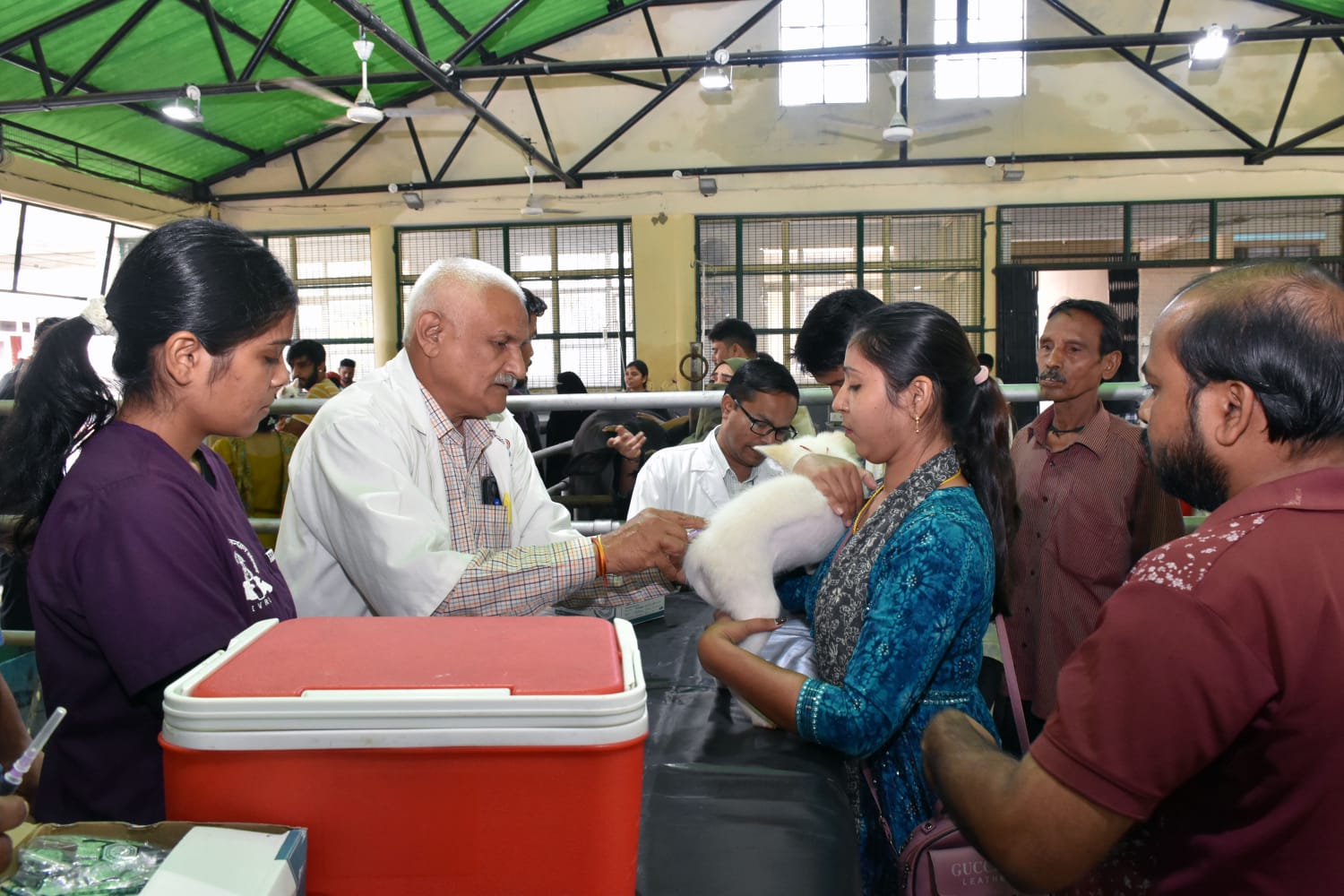
The programme began at the institute’s Referral Polyclinic in the presence of Joint Director (Academics) Dr S.K. Mendiratta. Around 40 dogs were administered free anti-rabies vaccinations. Dr Abhijit Pawade, Dr U.K. Dey, Dr A.C. Saxena and Dr J.K. Prasad were among those present.

As part of the outreach activities, the Department of Veterinary Public Health organised a rabies awareness programme at Rajpura Mafi village in Bareilly under the theme “Together Against Rabies.” The programme was organised in coordination with Dr D.C. Shukla and Rotary Club, Izatnagar, with the objective of educating villagers about rabies prevention, immediate steps after an animal bite and the importance of timely medical treatment.
Senior Scientist in the Department of Veterinary Public Health, Dr Himani Dhanje, delivered an interactive session with villagers. She explained how rabies is transmitted, its major symptoms and signs, and measures for prevention and control. She also discussed common local practices and traditional remedies followed after animal bites.
Villagers were advised not to rely on home or traditional remedies following an animal bite. They were informed about the importance of immediately washing the wound thoroughly with soap and running water, seeking medical advice at the earliest and completing post-exposure prophylaxis (PEP) as prescribed by a healthcare professional.
They were also encouraged to report animal-bite incidents and complete the recommended rabies vaccination schedule as advised by medical professionals.

Students of the third year of BVSc & AH presented an educational street play on rabies awareness. Through realistic and simple situations, the students demonstrated appropriate steps to be taken following an animal bite, particularly a dog bite. The performance was appreciated by villagers, who subsequently participated actively in the awareness discussion.
Informational pamphlets on rabies prevention and control were also distributed among villagers. The material contained simple guidance on preventing rabies, providing immediate first aid after an animal bite and seeking timely medical assistance.
The programme provided an opportunity for meaningful interaction among veterinary experts, students and members of the rural community. Through the combined efforts of the Department of Veterinary Public Health, Referral Polyclinic and Rotary Club, Izatnagar, key messages on rabies prevention and control were effectively communicated at the community level.
Report from Bareilly by Akhilesh Chandra Saxena